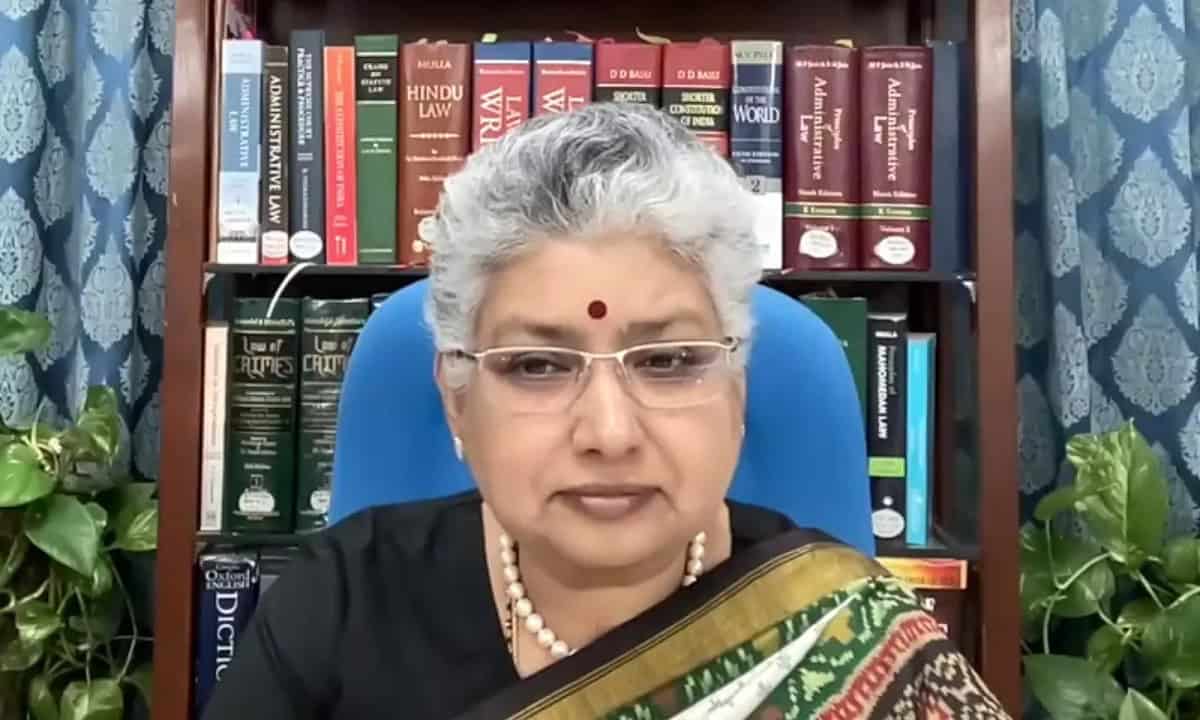
Justice B.V. Nagarathna Calls for Stronger Election Commission Independence
In a powerful and thought-provoking address, Supreme Court Justice B.V. Nagarathna emphasized the urgent need to protect the independence of the Election Commission of India from political interference.
Speaking at the 1st Dr. Rajendra Prasad Memorial Lecture at Chanakya National Law University in Patna, Justice Nagarathna highlighted that democracy is not just about conducting elections—but about ensuring those elections are fair, neutral, and free from influence.
Why the Election Commission Matters
Referring to Article 324 of the Constitution of India, Justice Nagarathna explained that the Election Commission of India plays a foundational role in shaping India’s democratic system.
She noted that elections are not merely routine events but the very process through which political authority is created. If the body conducting elections is influenced by those contesting them, the integrity of democracy itself is at risk.
“If those who conduct elections are dependent on those who contest them, neutrality cannot be assured.”
Institutions Must Remain Independent
Justice Nagarathna stressed that key constitutional institutions—including the Comptroller and Auditor General of India and the Finance Commission of India—are designed to function independently.
These bodies are intentionally insulated from political processes to maintain neutrality and accountability. Any interference, she warned, undermines their purpose and weakens democratic governance.
Warning Against Silent Democratic Erosion
One of the most striking parts of her speech was her warning about how democracies decline—not suddenly, but gradually.
Justice Nagarathna explained that institutional decay happens when checks and balances weaken over time. Even if elections continue and laws are passed, democracy can still erode if institutions fail to hold each other accountable.
She cautioned that:
- Structural weakening comes before the loss of rights
- Institutions must actively check one another
- Democracy can appear functional while losing its core strength
Centre and States: Equal Partners
Addressing Centre-State relations, Justice Nagarathna urged the Union government to treat states as equals, not subordinates.
She described the federal structure as a system of “co-equals” and called for cooperation beyond political differences. According to her, strong Centre-State coordination is essential for maintaining constitutional balance.
Looking Ahead: A Crucial Moment for Indian Democracy
Justice Nagarathna, who is set to become India’s first woman Chief Justice, concluded with a powerful message: safeguarding the Constitution is not just about responding to crises—it depends on the everyday functioning of institutions.
Her remarks serve as a reminder that democracy is sustained not only by elections, but by the independence and integrity of the institutions that oversee them.