After 21 gruelling hours at the negotiating table, the first direct US-Iran talks since 1979 ended without a deal — and both sides are pointing fingers.
When Iranian Parliament Speaker Mohammad Bagher Ghalibaf landed in Islamabad on Saturday, he didn’t mince words. “Our experience in negotiating with the Americans has always been met with failure and broken promises,” he said. That statement turned out to be almost prophetic.
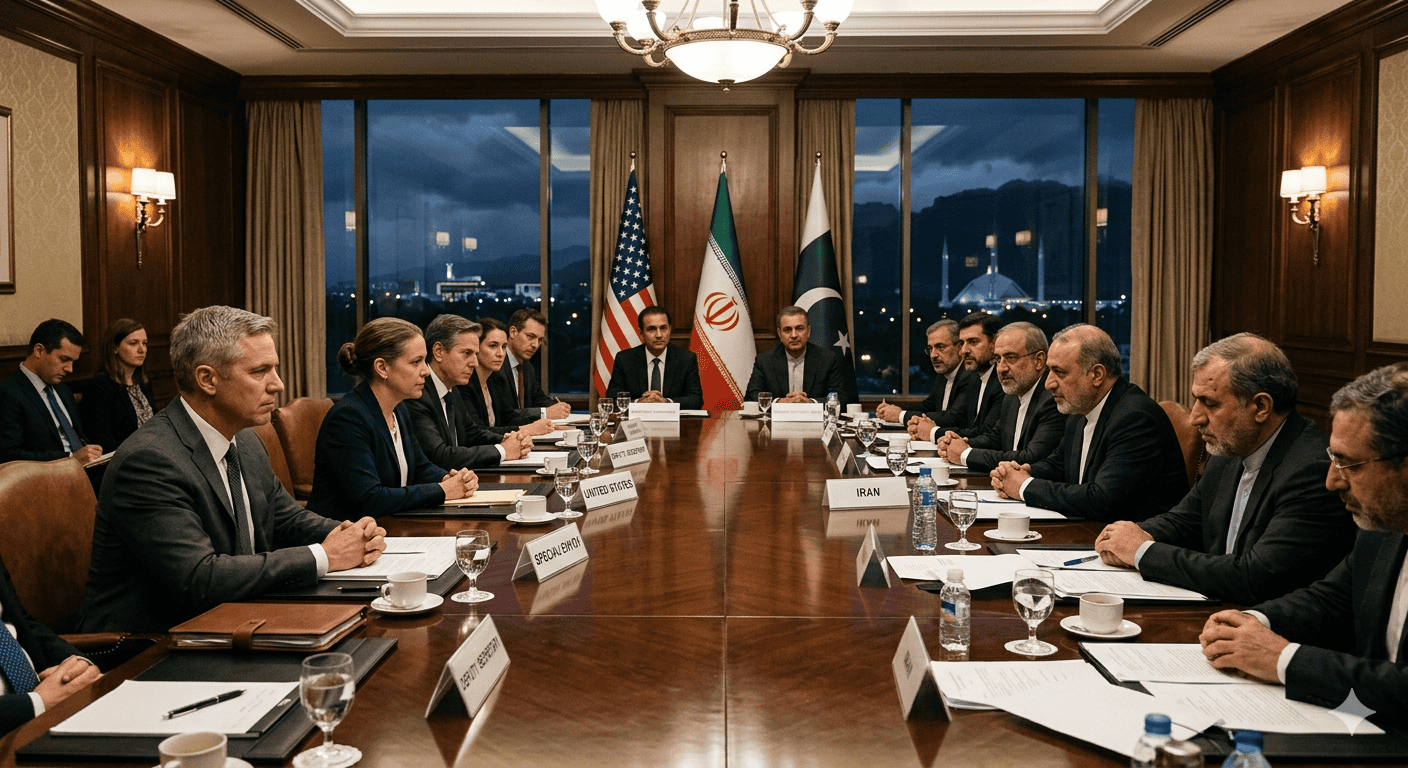
More than 21 hours later — after marathon talks through the night at the Serena Hotel in Pakistan’s capital — US Vice President JD Vance boarded Air Force Two and headed home. No deal. No agreement. Just a parting shot that the failure was “bad news for Iran much more than it’s bad news for the United States.”
And just like that, the most significant diplomatic encounter between Washington and Tehran since the 1979 Islamic Revolution was over.
What Actually Happened in Islamabad?
The talks, held on April 11–12, 2026, were brokered by Pakistan and brought together two delegations that, not long ago, were openly at war. The US-Israeli strikes on Iran began on February 28, 2026, and a fragile two-week ceasefire only came into effect on April 8 — just days before these talks began.
Pakistan had worked hard to set this up. Prime Minister Shehbaz Sharif and Army Chief Asim Munir both earned rare trust from Washington and Tehran simultaneously — something analysts described as genuinely unusual. The city was locked down, with thousands of paramilitary personnel and army troops lining the streets around the Serena Hotel.
The US team was heavyweight: Vance, special envoy Steve Witkoff, and Trump’s son-in-law Jared Kushner. Iran brought a delegation of around 70 people, led by Ghalibaf and Foreign Minister Abbas Araghchi. By any measure, this was not a casual diplomatic meeting.
And yet, it ended in collapse.
The Two Issues That Broke Everything
According to Iran’s Foreign Ministry spokesperson, the two sides actually made progress on several points. But two issues proved impossible to bridge: Iran’s nuclear programme and the Strait of Hormuz.
The US position, as stated plainly by Vance, was simple: Iran must commit, in ironclad terms, to never building a nuclear weapon — and must surrender any tools that would allow it to quickly build one. Trump had said before the talks that nuclear disarmament was “99 percent” of what America wanted.
Iran’s pushback was equally firm. Tehran has long maintained that its nuclear activities are peaceful — for energy and medical purposes — and it refused to sign away what it considers a sovereign right. Al Jazeera’s correspondent in Islamabad noted that the US was essentially asking Iran to surrender even civilian nuclear capabilities, which Tehran sees as a red line.
On the Strait of Hormuz — the critical waterway through which roughly one-fifth of the world’s oil passes — Iran wants full control and has even floated charging ships a toll of up to $2 million for safe passage. The US wants the strait open and free. There’s no middle ground there, at least not yet.
Iran’s Accusation: “America Was Looking for an Excuse to Leave”
Here’s where the Anandabazar headline comes from — and it’s worth separating what is confirmed from what is claimed.
Iran’s Fars News Agency, citing a source close to the Iranian negotiating team, said that American delegates appeared to be “looking for an excuse to leave the negotiating table.” The source alleged that the US came to Islamabad mainly to restore its international image after a costly and unpopular war — not to genuinely negotiate.
Ghalibaf himself, after the talks collapsed, said his delegation had raised “forward-looking” initiatives but that the US simply failed to earn Tehran’s trust. Iran’s Tasnim news agency blamed what it called “excessive US overreach and ambitions” for the deadlock.
What the US Side Said
Vance was blunt but left a small door open. “We leave here with a very simple proposal — a method of understanding that is our final and best offer. We’ll see if the Iranians accept it,” he told reporters.
Fact check verdict on this claim: Partially supported, but contested. Iran’s accusation that the US was insincere is a claim from Iranian state-aligned sources, not independently verified. What is confirmed is that the US entered the talks with very firm, non-negotiable demands — especially on nuclear issues — and left with those positions unchanged. Whether that constitutes “looking for an excuse” or simply “holding firm” depends heavily on which side you ask.
Notably, he did not say what would happen if Iran didn’t accept it. The fragile two-week ceasefire’s fate now hangs in uncertainty. Trump, for his part, had already downplayed the talks before they even finished: “Whether we make a deal or not makes no difference to me, because we’ve won,” he told reporters on Saturday.
After Vance left Islamabad, Trump escalated — threatening a “full naval blockade” on Iran and warning of consequences if the Strait of Hormuz was not reopened.
Pakistan’s Quiet Disappointment
Pakistan, the gracious host and mediator, urged both sides to uphold the ceasefire. Foreign Minister Ishaq Dar called on the US and Iran to “continue with a positive spirit to achieve durable peace.” It was diplomatic language, but the disappointment was palpable. Islamabad had staked significant political capital on making these talks succeed.
So Where Does This Leave Things?
Iran’s Foreign Ministry says no one should have expected a deal in a single session. That’s fair — even the 2015 nuclear deal took years of negotiations. Iran’s spokesperson confirmed that contacts with Pakistan and regional partners would continue, suggesting the diplomatic door hasn’t fully slammed shut.
But the situation on the ground is deeply unstable. Israel has continued its military campaign in Lebanon, bombing Hezbollah targets overnight even as the Islamabad talks were underway. Netanyahu said plainly that Israel’s campaign against Iran “is not over.” Iran has demanded a Lebanon ceasefire as part of any broader deal, which the US has refused to put on the Islamabad agenda.
Hundreds of ships remain stranded in the Persian Gulf. Global energy supplies continue to be throttled. And Trump’s threat to resume the war — or worse — hangs over everything.
The Bottom Line
The Islamabad talks were historic — the first direct, face-to-face engagement between the US and Iran at this level since the Shah’s era. That they happened at all was remarkable. That they failed, perhaps, was predictable.
The gap between Washington’s demand for nuclear surrender and Tehran’s insistence on sovereign rights is not the kind of thing you bridge in 21 hours over a hotel conference table in Islamabad. What comes next — whether it’s more diplomacy, more war, or something in between — will define the Middle East for years to come.
Sources: Al Jazeera, NPR, CNN, Times of Israel, CGTN, Israel Hayom, Wikipedia (Islamabad Talks), The Manila Times — April 12, 2026.
This article was last updated on April 12, 2026.