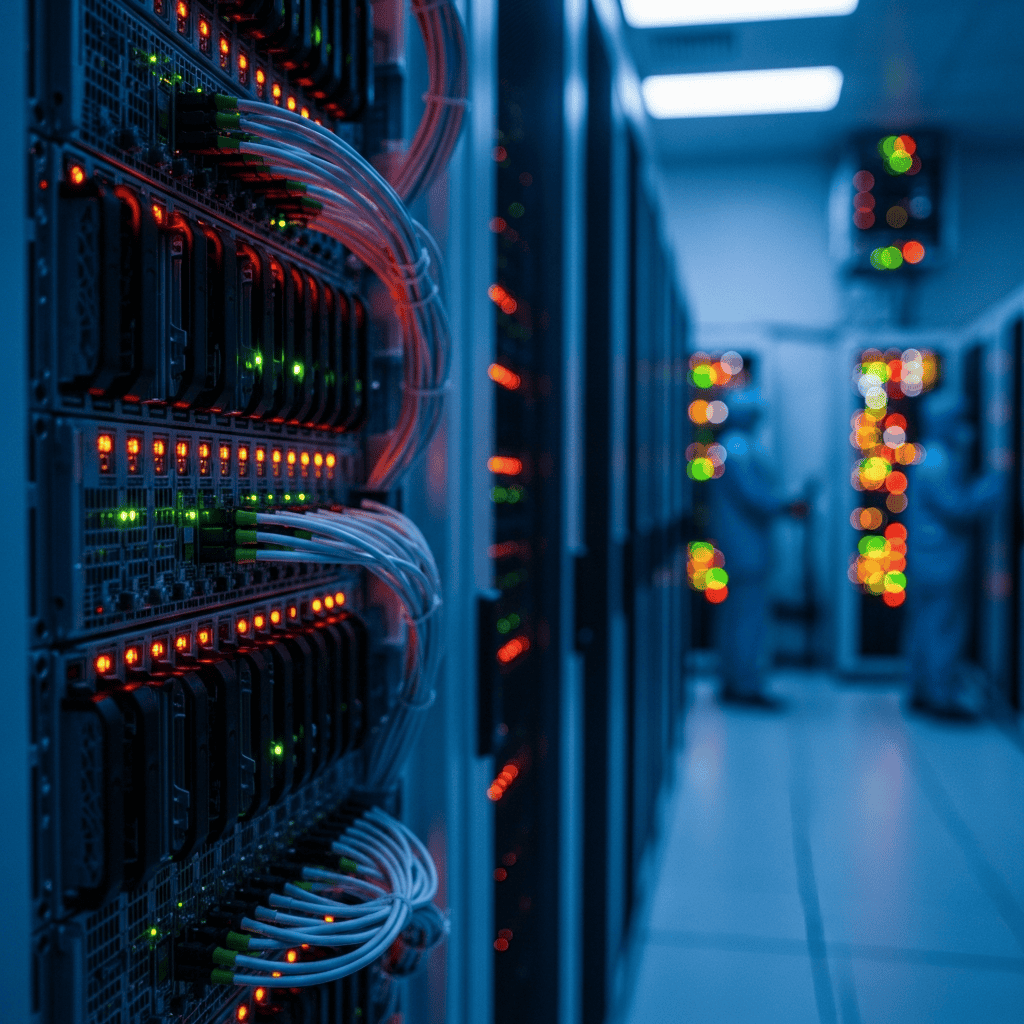
The global race for artificial intelligence supremacy is intensifying, with tech giants pouring billions into custom chip development and advanced model training. This escalating competition is straining supply chains and pushing innovation boundaries from Silicon Valley to Shenzhen.
Nvidia Corp. remains the undisputed king of AI hardware, with its H100 and upcoming H200 accelerators in high demand. Yet, the persistent shortage has spurred players like Microsoft, Google, and Amazon to design their own silicon.
Microsoft, a major investor in OpenAI, recently unveiled its custom Maia 100 AI chip and Cobalt 100 CPU, aimed at powering its Azure cloud services. This move mirrors Google’s long-standing commitment to its Tensor Processing Units (TPUs) for its AI workloads.
Amazon.com Inc.’s AWS division is also expanding its custom chip portfolio with new versions of its Trainium and Inferentia processors. Meanwhile, Apple Inc. is reportedly prioritizing on-device AI capabilities for future iPhones and Macs, potentially reducing reliance on cloud-based solutions.
On the software front, the battle for generative AI leadership is equally fierce. OpenAI continues to push boundaries with new models like Sora, demonstrating advanced text-to-video generation, while Google’s Gemini models are rapidly iterating.
Meta Platforms Inc., through its open-source Llama series, has carved out a significant niche, fostering a vast developer ecosystem. This strategy could democratize access to powerful AI tools, potentially accelerating adoption across various industries.
Analysts at Goldman Sachs project the AI market could reach trillions of dollars in annual revenue within the next decade, fueling unprecedented investment. However, the immense computational power required is raising concerns about energy consumption and data center infrastructure.
Globally, regulators are scrambling to establish frameworks for AI. The European Union’s landmark AI Act, expected to be fully implemented by 2026, aims to classify and regulate AI systems based on risk, potentially setting a global standard.
In the United States, President Biden’s executive order on AI safety has pushed for new standards and safeguards, while China continues its aggressive national strategy to become a global leader in AI by 2030, fueling geopolitical competition.
Despite the rapid advancements, the industry faces significant hurdles, including a persistent talent crunch and ethical dilemmas around bias and intellectual property. The path to fully integrated, responsible AI across all sectors remains complex, people familiar with the matter said.